
Publication Date
2025
Document Type
Book
Description
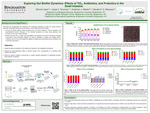
Chemicals like nanoparticles and antibiotics are increasingly used in daily life, raising concerns about their effects on gut microbiota. Titanium dioxide (TiO₂), a common food additive, and antibiotics can disrupt microbial communities, affecting gastrointestinal function and contributing to gut-related diseases. Microbial disruption may be alleviated by probiotics, known for stabilizing and protecting the gut microbiome. This study focused on the small intestine, a key site for nutrient absorption, microbial diversity, and immune regulation. The hypothesis was that probiotics could mitigate the effects of TiO₂ on a synthetic small intestine microbiome. A biofilm of four bacteria was established, and probiotics, TiO₂ and doxycycline were introduced separately in the system. Probiotics did not affect the healthy gut microbiome, indicating its stability, which is beneficial as it shows probiotics do not disrupt normal gut conditions. TiO₂ and doxycycline had dose-dependent effects, particularly reducing S. salivarius. These findings highlight the probiotics do not have any effect on health microbiome, TiO₂ and doxycycline have selective impacts on gut microbial communities.
Files
Download Full Text (1.4 MB)
Recommended Citation
Islam, Shirmin; Tanzman, Jacob V.; Mahler, Gretchen J.; and Marques, Cláudia N. H., "Exploring Gut Biofilm Dynamics: Effects of TiO₂, Antibiotics, and Probiotics in the Small Intestine" (2025). Research Days Posters 2025. 76.
https://orb.binghamton.edu/research_days_posters_2025/76