-
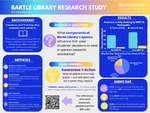
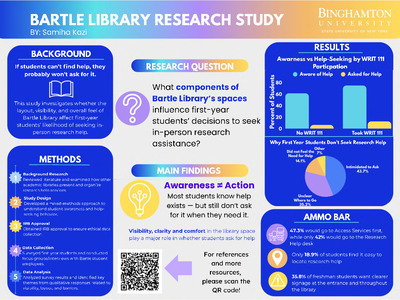
Bartle Library Research Study
Samiha S. Kazi
This study examines the factors that influence first-year students’ decisions to seek in-person research assistance at Bartle Library at Binghamton University. While libraries provide valuable academic support and resources, many students do not consistently use these services. Drawing on existing literature, this research explores how library design, service awareness, and emotional factors shape help-seeking behavior. Prior studies suggest that unclear layouts, low visibility of help desks, and limited understanding of librarian roles can discourage engagement. While other studies state that stigma and fear of judgment may further delay students from seeking help. However, existing research often overlooks how these factors interact within a specific physical environment, particularly for first-year students. To address this gap, this study investigates how the layout, visibility, and overall atmosphere of Bartle Library influence student behavior, with the goal of identifying ways to improve accessibility and engagement.
-
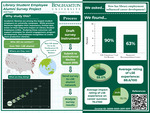
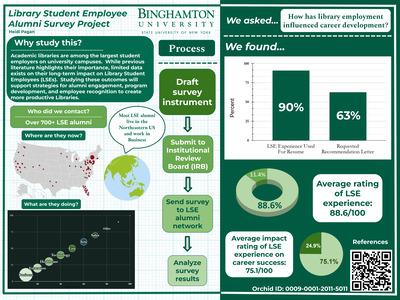
Library Student Employee Alumni Survey Project
Heidi Pagan
Academic libraries are among the largest student employers on university campuses. This project examines the paths of former Library Student Employees (LSEs) to better understand how student employment in academic libraries contributes to professional development, transferable skills, and alumni engagement. The primary research question guiding this study is: Where are former library student employees now, and how has their library work influenced their career paths? This project provides evidence of the lasting impact of library student employment and supports strategies for alumni recognition, engagement, and program development.
-
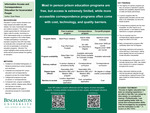
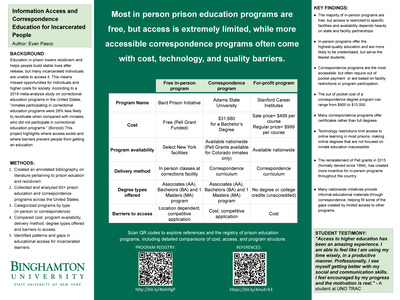
Information Access and Correspondence Education for Incarcerated People
Evan J. Pasco
Having quality access to education is an important factor in improving outcomes for incarcerated individuals, which includes higher employment rates and reduced recidivism. Unfortunately, incarcerated learners face many barriers when attempting to participate in these educational programs, such as high cost, censorship, and institutional restrictions. Despite the importance of continuing education, limited centralized information remains available on it or the obstacles that affect participation.
This project focuses on the broader information landscape for incarcerated learners, particularly examining correspondence education programs in the United States. This research includes an analysis of common barriers in accessing education, a review of scholarly literature on prison education, and a comparison of existing educational programs. By identifying gaps, challenges, and trends in education for incarcerated students, this project will aim to highlight the importance of accessible education, especially in an incarcerated environment.
-
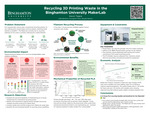
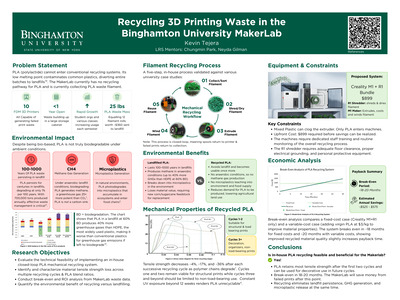
Recycling 3D Printing Waste in the Binghamton University MakerLab
Kevin Tejera
3D printing is an important part of many university makerspaces. However, it comes with negative environmental consequences, including polylactic acid (PLA) filament waste. Currently, the MakerLab at Binghamton University has no closed-loop recycling system, leading to large quantities of used filament being sent to landfills, where it contributes to greenhouse gases and microplastic production.
This research project looks at the feasibility of an in-house PLA filament recycling program by examining the mechanical recycling process, cost/equipment needs, contamination issues, available space, and the effect of repeated recycling on the filament. An economic analysis will be completed through a break-even analysis and a return on investment analysis using waste volume information. Environmental impacts will be assessed based on PLA degradation, greenhouse gas emissions, and microplastic production. This research is anticipated to provide an evidence-based decision for the environmental value and viability of recycling PLA materials at the Binghamton University MakerLab.
Printing is not supported at the primary Gallery Thumbnail page. Please first navigate to a specific Image before printing.