
-

Legitimacy and Institutions in Personalized Authoritarian Regimes
Nicholas McKeon
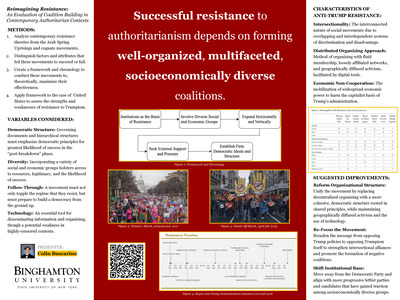
This research focuses on the area of how modern autocratic regimes legitimize themselves using existing social and governing institutions. Using inductive reasoning, this work will perform an examination of the Russian post-Soviet transition towards authoritarianism with Putin’s rise to power as a consideration of modern personalist autocracies and their relationship to independent societal institutions. Contemporary regime analysis indicates a trend towards increased personalized regime support at the expense of civil structures and general welfare. This is indicative of the realization of legitimacy through the ascendency of personal governing networks, thereby gutting legitimate institutions of power. This contributes to the larger discussion regarding the public support and stability enjoyed by dictatorial regimes and how the transition toward such governments is paved with civil erosion.
-

Politics in Printing: Protestantism, Catholicism, Capitalism, and Censorship
Fiona McMurray
Imagine a world in which every piece of media ever written must be approved by the government before being publicly distributed. Despite sounding like part of a dystopian novel, this is instead a process known in Latin as “Imprimatur”- or in English, “let it be printed”. This process was first used by the Catholic Church in the mid-1500s but was later adopted by others. A set of books that were Imprimatured in England in the 1700s is a collection of Latin poems held by Binghamton University’s Special collection entitled Musarum Anglicanarum Analecta. The research process into these books studied the Imprimatur process and its relationship to censorship over a period of time, especially since the third volume is an “unauthorized continuation” of the first two. The broader implications of this research could tell us whether Imprimaturing was strictly censorship, or if it was more politically and socially nuanced.
-

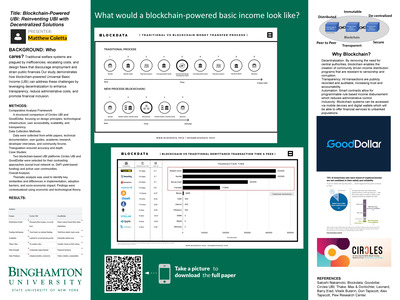
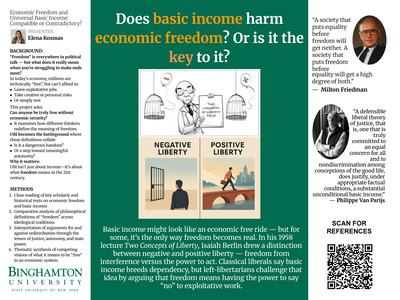
Basic Income in America: Exploring the Ideology Behind the Agenda
Jack McShane
While basic income is experiencing renewed interest in American political, scholarly, and public discourse, it is often presented within two conflicting ideological frameworks. Scholars such as Anton Jäger and Daniel Zamora have labeled it a chiefly neoliberal policy while others like Philippe Van Parjis have described it as a socialist effort to expand the welfare state and even undermine capitalism. This podcast seeks to address these conflicting perspectives by providing a comprehensive analysis of the ideologies driving historical and contemporary basic income proposals in the U.S. The podcast begins with a discussion of the early basic income proposals of the National Welfare Rights Organization and Nixon’s Family Assistance Plan. It then examines contemporary proponents and critics of basic income and their differing ideologies. This culminates in an analysis of the core motivations for basic income proposals in America whilst providing the listener with the context to formulate their own conclusion.
-

Leaves of Grass: Public Opinion and the Continuous Suppression of Minorities
Hailey Miglino
In November 1881, James R. Osgood and Company published the seventh edition of Leaves of Grass. Shortly after, the New England Society for the Suppression of Vice condemned the book for its references to sexuality and homosexuality, resulting in its removal from a Boston library. This episode exemplifies a long history of censorship, a practice rooted in ancient civilizations and perpetuated by governments and religious authorities throughout history. A book's material aspects enrich its value; this project explores how physical evidence, like the absence of annotations, provides insights into the broader history of suppression surrounding Leaves of Grass. The condition of Binghamton University’s copy serves as both a historical artifact and a reminder of ongoing censorship, underscoring the importance of preserving the voices of marginalized communities. The evolving reception of Walt Whitman and his work reflects changing societal attitudes toward queerness and highlights the persistent marginalization faced by certain individuals.
-

From Birth to Power: How Baptismal Records in a Book of Hours Shed Light on the Nobility Surrounding Langres
Eva Mihalik
Records have been destroyed throughout human history, leaving gaps in our knowledge of the past that may never be completely restored. During the French Revolution, the destruction of the church’s and nobility’s documentations was commonplace; however, within the pages of a surviving 15th-century illuminated Book of Hours is a record of 17th- and 18th-century baptisms associated with the noble family of de Berman. This is the first project to decipher and translate this marginalia– marginalia that not only builds a family, but gives insight into their connections. By tracking down genealogies and various accounts about the godparents of the recorded baptisms, it shows how the de Berman family was integrated with influential figures around the city of Langres– from a Knight of Malta to a Secretary of the King. More than blemishes in a book, it is marginalia that allow for a gap in history to be repaired.
-

The Airport Effect: How Proximity to LaGuardia and JFK Influences Property, Income, and Quality of Life
Noah Miller
How do airports affect surrounding environments as opposed to distant ones in major urban areas? This project examines the impact of airports on local communities, focusing on New York City’s LaGuardia (LGA) and John F. Kennedy (JFK) airports. It explores how proximity to airports and flight paths influences property value, household income, and quality of life in four airport-adjacent neighborhoods—East Elmhurst, Flushing, The Rockaways, and Springfield Gardens to contrast three neighborhoods at greater distances from LGA and JFK–Rego Park, Midtown Manhattan, and Riverdale. This analysis will highlight how airports shape local socioeconomic trends and urban development. The initial four neighborhoods are unique in their proximity to major commercial airports and flight paths, meaning they have developed characteristics setting them apart from the three neighborhoods farther away from LGA and JFK. This research broadens the conversation about how airports work together with the city environments they exist in.
-

The Power of Social Media in Political Movements: How Teens Are Shaping Democracy Online
Adina Mogul
The use of social media by teens in political movements is reshaping how democracy functions. By utilizing these platforms, young people are holding politicians and institutions accountable in real-time. Social media provides a direct channel for them to question authority and influence public opinion. Politicians are increasingly paying attention to these digital conversations, recognizing the power of youth-driven movements to sway elections and policy decisions. This research addresses the following questions: How do teenagers use social media platforms for political activism? What are the unique characteristics of teen-led movements online? How do they compare to traditional forms of activism? The power of social media in political movements lies in its ability to give a voice to the next generation. Teenagers are proving that age is not a barrier to making a difference, and their innovative use of social media is inspiring millions to care about issues that shape our world.
-

Characterizing Biofilm Dispersion in the Gut Bacterium Enterococcus Faecalis
Raheema Mohammed-Abraham, Nermin Mohamed, Marian Abdikarin, Jackson Nguyen, David Lam, Peter T. McKenney PhD, and David G. Davies PhD
Biofilm dispersion is a survival mechanism where bacteria transition to a planktonic lifestyle. Dispersion is not characterized in Enterococcus faecalis (E. faecalis), a gut bacterium. In semi-batch cultures, E. faecalis formed steady state biofilms after 48 hours grown at 37°C in 10% Tryptic Soy Broth. Next, biofilm culture challenges with a 10-fold step increase in nutrients following 4 days of growth—prior to self-induced dispersion—resulted in statistically significant dispersion responses. To evaluate bile acids’ effect, dispersed cells were exposed to the primary and secondary bile acids cholic and lithocholic acid. Lithocholic acid retained biofilm growth during dispersion and thus may spur intestinal tract biofilm formation and preservation. Dose-finding assays were conducted with the oxazolidinone linezolid and glycopeptide vancomycin: E. faecalis displayed antibiotic tolerance to 50 µg/ml linezolid treatment, yielding a 0.5 log reduction. This study has revealed novel findings on the growth and dispersion response of E. faecalis biofilms.
-

The AAPI Experience: How Changing Asian-American and Pacific-Islander Populations in America Are Impacted in Healthcare
Zana Morshed
Over the last 20 years, the Asian-American and Pacific-Islander (AAPI) population has steadily increased within the United States. Due to this rapid increase, many systems, including American healthcare systems, have not accommodated this population. Healthcare research within the United States is focused on Chinese and Vietnamese populations due to historical connections with their country of origin. South, Southeast, West Asians, and mixed individuals are not accounted for and are often overlooked. This study focuses on the experiences of all AAPI individuals with their healthcare providers and how their racial background influences these interactions. Hour-long interviews are conducted detailing participant’s relationships with their providers and how their identities are accounted for in their care. Grounded theory is used to code for these interviews. Findings suggest there are differences in treatment based on the ethnic identity of the individual.
-

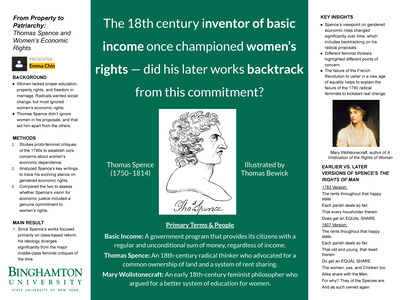
A Mob of Mothers?: Revisiting the Legacy of the National Welfare Rights Organization
Makar Mozgovoy
Formed in 1966, the National Welfare Rights Organization (NWRO) built a coalition of women of color, poor whites, and social workers to fight for a guaranteed income. However, the impact of the NWRO has often been reduced to its role in preventing the passage of Richard Nixon’s Family Assistance Plan––a much more stifling plan for a negative income tax. Building on recent reevaluations by Premilla Nadasen and Wilson Sherwin, this project argues that the long-term impact of the NWRO is best understood by cross-referencing contemporary reactions from historians and journalists to advocacy campaigns of the time. Though the organization was critiqued for its militancy, this paper argues such stridency was necessary to harness attention towards progressive reform. While critics would blame the movement’s failure on these tactics, the organization was ahead of its time in modeling a form of intersectional politics that would be theorized by Kimberlé Crenshaw in 1989.
-

Effect of Diet Quality on Emotional Intelligence and Pathological Eating Habits in Minority and White Populations
Maha Naeem and Vaishnavi Saravanakumar
This study examines how diet, exercise, emotional intelligence (EI), and disordered eating patterns interact across racial groups. An anonymous online survey of adults aged 18 and older assessed EI traits, eating behaviors, and demographics. Pearson’s Correlation Analysis analyzed associations between diet, exercise, and EI, with an emphasis on racial differences. Among minority participants, exercise and nutrient-dense diets were positively correlated with EI traits such as motivation and stress management (p < 0.01). White participants showed similar correlations but displayed stronger associations between exercise and restrictive eating behaviors (p < 0.01). Additionally, fast food and caffeine intake were linked to disordered eating and body image concerns among White individuals (p < 0.01), while fast food consumption alone was associated with body dissatisfaction in minorities (p < 0.05). These findings suggest that diet and exercise affect emotional well-being and disordered eating in racially distinct ways, highlighting the need for culturally informed interventions.
-

Stories That Shape Change: Narratives of Girls’ Education by Malala Yousafzai, Buchi Emecheta, Wangari Maathai
Mallika Nair
While extensive research exists on girls' education, much of it relies on quantitative data with a limited focus on personal narratives. Further research is needed on how lived experiences interact with policy changes. This paper explores how personal narratives highlight what quantitative data and policies might miss. By analyzing autobiographies by Malala Yousafzai, Wangari Maathai, and Buchi Emecheta, it examines how firsthand accounts create narrative-driven empathy that reveals lived experiences beyond statistics. Through readings of I Am Malala, Head Above Water, etc, alongside analyses of scholarly articles, this paper emphasizes how storytelling can generate support, legitimize reform efforts, and shape discourse around educational access and equity. Ultimately, this paper argues that personal narratives play a crucial role in shaping how we understand and advocate for girls’ education, by filling critical gaps left by quantitative metrics. These narratives reveal the lived realities, cultural barriers, and societal expectations that shape girls’ educational experiences–insights that data alone fail to capture.
-

The Batrachomyomachia -- a Short Lived Battle with a Long Lasting Legacy
Dexter Navage
The ancient Greek poem Batrachomyomachia tells the story of a one-day war between the kingdoms of mice and frogs, ended only by the intervention of Zeus. This poem has taken many forms, including a 1721 collection of translations which can be found in the Binghamton Special Collections. This paper tells the story of the book’s many owners, from a French nobleman who killed himself before the revolution could take his head to a Prussian bookseller who fled to America with his Jewish wife in the late 1930s. While some left a name or other mark of ownership behind, other owners were only found in historical records including this book. This paper argues that these records are the only way we have a connection between this book and some of its owners, signifying the incredible importance of keeping and maintaining proper records, allowing future scholars to explore otherwise unidentifiable connections.
-

Chronicling Language, Gender, and Sexuality Research through Digital Text Analysis
Aidan Niebauer
This project is an exploratory analysis of the field of language, gender, and sexuality using the journal Language in Society, a key publication within the fields of sociolinguistics and linguistic anthropology. Chronicling over 50 years of scholarly research, a corpus of research will be analyzed with digital text analysis methods using Python, including topic modeling and sentiment analysis. The project aims to empirically analyze how a) notions of gender and sexuality are represented in linguistics research b) how language surrounding gender and sexuality is represented, discussed, and challenged through research, and c) how language regarding sexual and gender identity has evolved over the course of the journal’s history and how it mirrors the contemporary global and sociopolitical history of gender and sexuality. Preliminary research has indicated trends in men and women’s conversational differences in the 1970s and 1980s, with trends in non-binary language and sexuality emerging in the 21st century.
-

Class Imitation and Mobility
Jordan Novak
This study examines how American workers, particularly Generation Z, navigate and perform social class through appearance, behavior, and communication, with a focus on the fashion industry. Drawing on ethnographic interviews with 20 employees across industries and age groups, including 3 Gen Z fashion workers, it explores class performance as both a survival strategy in an unequal labor market and a form of self-expression in the digital age. Key findings reveal diverse strategies for class signaling, from "dressing for success" to leveraging social media and tech literacy as modern forms of cultural capital. The study highlights a phenomenon of "class cosplay," where workers temporarily embody different social strata to navigate professional environments. This research sheds light on how fast fashion and social media have blurred and reinforced class boundaries, offering critical insights into social mobility, professionalism, and the role of technology in reshaping class dynamics in the 21st-century workplace.
-
Do People Even Read Anymore?
Casey Nyvall
Do American adults read for pleasure? If so, do their reading habits in childhood positively correlate to this occurrence, or have any correlation at all? Using university students to represent the adult population, an anonymous survey across a variety of majors and student years attempts to deduce the answer to these questions, by asking respondents if they were voracious or reluctant readers as children, as well as if their households encouraged reading. This even goes as far back as to include being read aloud to by parents or guardians during infancy. The impact of COVID-19 on reading habits is also studied, as respondents answer whether or not their reading habits changed (and if so, for better or worse) due to COVID. It is expected that humanities majors read more than math and science majors, and that child readers grow into adult readers, with COVID only leading to higher reading rates.
-

Racial Discrimination in Law Enforcement and the Importance of Spreading Awareness
Dalia O'Keeffe
This project will examine racial discrimination within law enforcement and how it targets African American and Muslim communities in the United States. Tactics of surveillance, racial profiling, and even violence are used by police to monitor innocents based purely on their religion or race. Qualitative examination of court cases brought against the government reveals the repeated pattern of unfounded racial discrimination against minorities, many of which are dismissed on purely legal grounds without addressing the underlying factual issue. The research for this project will show that utilizing social media and litigation can not only bring awareness to social issues, but provide the basis for which legitimate change can take place. Research into the effects of widespread awareness of human rights issues shows that it makes a real difference towards addressing deeply rooted problems and can be an invaluable tool to prevent unchecked racial bias in law enforcement.
-

Ethical Considerations of True-Crime Entertainment on Victims’ Loved Ones
Jordan Ori
True-crime has become one of contemporary American media's most popular entertainment genres. This paper examines the reasons behind our public fascination with true-crime and its implications, specifically regarding how it impacts victims’ loved ones. Through a critical analysis of three key forms of true-crime entertainment—dark tourism, film, and podcasts—this research will explore the ethical concerns surrounding the portrayal of crime-related tragedies as entertainment. While existing scholarship often dismisses the genre as inherently problematic, this mindset is unrealistic and unproductive. Instead, this paper advocates reforming its current structure and fostering a more socially responsible and ethical approach. Moreover, to reduce harm to victims’ loved ones rather than just entertaining, true-crime content can and should be shifted to raise awareness, cultivate empathy, and advocate for victims.
-

The Effects of Diversity Within Diet on Productivity
Marissa Pagnutti, Kyle Magro, Elizabeth Ward, Ela Shriqui, Yasmine Fendoune, and Sophia Karmazin
This study focused on diversity within diet and its impact on productivity. Food variety ensures that the proper balance of nutrients is achieved. Different nutrients have various impacts on the body, influencing motivation and energy levels, the extent of which is currently unknown. A total of 304 participants completed an anonymous online survey administered through Google Forms. The survey inquired about demographics and the connection between diet, mental distress, and neurobehaviors. Data were analyzed using SPSS version 28.0. Consuming green leafy vegetables was negatively correlated with both feeling depressed (p< .01) and that everything is an effort (p< .01), which can lead to decreased productivity. Intake of fish was positively associated with setting and completing goals (p< .01). Results indicate that a diverse diet is positively associated with improved mental well-being, highlighting the role of dietary habits in enhancing daily performance and reducing stress.
-
The Therapeutic Potential of Music
Michael Parisi
Music has long played a vital role in human life as a medium for communication, emotional expression, and cultural exchange. In recent years, growing attention has been given to its therapeutic potential, particularly in addressing mental health challenges such as anxiety, depression, and neurological disorders. This study explores the intersection of music and mental health, investigating how musical elements such as tempo and rhythm contribute to emotional regulation and therapeutic efficacy. Through a comprehensive literature review and an original survey, this research aims to assess the effectiveness of music as a coping mechanism and compare its perceived benefits to other therapeutic strategies. Findings from this research will contribute to a deeper understanding of music’s role in mental health treatment and offer insights into standardizing and scaling music-based therapies. By highlighting music’s accessibility and cost-effectiveness, this study underscores music’s significance as a viable therapeutic tool in an increasingly mental health-conscious society.
-

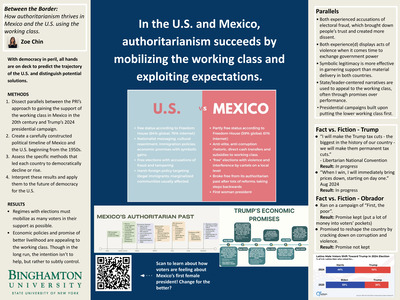
The Authoritarian Equation: Psychology and External Factors in Authoritarian Support
Anita Perez
In times of crisis, authoritarian leaders often gain support as people seek stability and security. Economic downturns, political polarization, and social unrest create conditions where people become more willing to accept strong-handed leadership, even at the expense of democratic norms. This paper examines the psychological and external factors that drive support for authoritarian leaders and asks what makes some individuals more susceptible to authoritarian rhetoric. This paper utilizes psychological theories, like the authoritarian personality framework, and political case studies from the United States, Hungary, and other nations to analyze how psychological predispositions and outside factors interact to shape authoritarian support. Additionally, a survey was conducted to assess how respondent’s attitudes toward authority correlate with factors such as fear, crisis, and media influence. Findings suggest that authoritarianism is not solely a personality trait but also a reaction to external conditions. These results emphasize the need for education, media literacy, and social movements as tools to counter authoritarian rhetoric.
-

Experiences of Grief and Resilience in College
Katy Perry
The aim of this project was to explore the experiences of bereaved college students not connected to counseling services, including: 1) Describing the age-salient behaviors, cognitions, and emotions that bereaved college students who are not utilizing counseling services associate with resilience and non-resilience. 2) Identifying barriers to or reasons for a lack of engagement with formalized campus counseling services. 3) Exploring the experience of bereavement in the undergraduate student population.
-

Imputation and k-NN based Haplotype Refinement of Simulated Ancient Mitochondrial Genomes
Nathaniel Plummer, Yuan Fang, Michel Shamoon-Pour, Ari Cozzarelli, Suhail Ghafoor, Laure Spake, and Matthew W. Emery
Ancient DNA (aDNA) is fragmented and degraded due to post-mortem processes, leading to low coverage and incomplete sequences. Mitochondrial DNA (mtDNA), despite its high copy number, is similarly subject to degradation processes, requiring statistical imputation for whole mtDNA reconstruction. While nuclear genome imputation is well-established, ancient mtDNA imputation remains underexplored. Here, this study benchmarks two mtDNA imputation pipelines—MitoIMP, and a novel pipeline integrating Minimac4’s Hidden Markov Model (HMM) with a k-Nearest Neighbors (k-NN) algorithm. Using the largest mtDNA imputation panel to date (n = 46,000), reconstruction accuracy was tested on 100 simulated ancient mtDNAs (≥0.25X coverage) generated with Gargammel and processed via EAGER (Efficient Ancient Genome Reconstruction). Imputation performance was evaluated using HaploGrep3 haplogroup classifications. The results show that combining a HMM with k-NN refinement significantly improves imputation accuracy, particularly at ultra-low coverage, and increases the likelihood of assigning accurate haplotypes to highly degraded aDNA and forensic DNA samples.
-

The Effects of Prenatal Ethanol Exposure on Development and 24-hour Ethanol Consumption During Adolescence
Princess Pokharel, Zoe Silverman, Hodaya Katz, Dehaven R. McCray, Monica M. Juarez-Barnes, Shafin Thahseen, Ani Kuke, Abigail M. Kelley, Marvin R. Diaz, and Anushree N. Karkhanis
Prenatal ethanol exposure (PAE) disrupts normal brain development resulting in behavioral deficits later in life, including a propensity to develop alcohol use disorder. This study investigated the effects of PAE on adolescent drinking patterns, using a single-bottle-choice drinking paradigm in Long Evans rats. PAE was hypothesized to increase 24-hour ethanol consumption. Interestingly, data showed that PAE female rats consumed less ethanol than their non-exposed counterparts, while male rats exhibited no significant differences in ethanol consumption. All female rats consumed higher amounts of ethanol than male rats, regardless of exposure. Additionally, PAE male and female rats had increased average body masses when compared to their age and sex-matched counterparts during early adolescence, though this effect diminished by late adolescence. These findings suggest that PAE influences drinking behavior in a sex and time-dependent manner. Further research is required to understand the mechanisms underlying these sex-dependent differences in ethanol consumption following PAE.
-

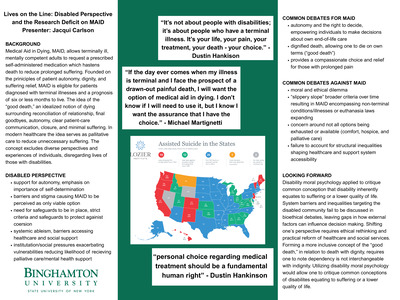
Is Death a Right or a Risk?: Examining Ableist Biases in MAiD Debate
Ava Polakoff
Medical Aid in Dying (MAiD) has gained recent attention as more policies are implemented allowing individuals to end their lives. For disabled individuals, this legislation raises concerns about ableist biases’ influence on decision-making. Some scholars view MAiD as a compassionate response to suffering, while critics argue it devalues disabled individuals’ lives and oversimplifies complex ethical dilemmas, perpetuating harmful attitudes. Although ableist biases in the MAiD debate have been examined, a gap remains in understanding how these biases impact perspectives of disabilities that influence legislation and medical decisions. By analyzing personal narratives such as "First Person: Living with Disabilities in the Age of MAiD", bioethics scholarship, legal analyses, and media representations of disabilities, this research explores the extent to which ableist biases influence attitudes in the MAiD debate for individuals with disabilities, emphasizing that these biases shape estimates of quality of life, contributing to policies that ignore disabled individuals diverse experiences.
Printing is not supported at the primary Gallery Thumbnail page. Please first navigate to a specific Image before printing.