
-
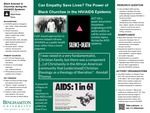
Black AIDS Activists in New York and Their Battle Against Stigma in the 1980s and 1990s
Elijah Poole-Davis
The HIV/AIDS epidemic in the 1980s and 90s disproportionately affected the African American community, intensifying racialized stigma and amplifying racial divides. This project explores how Black AIDS activists centered in the New York area challenged these stigmas and transformed public attitudes towards HIV/AIDS. Central to these efforts were partnerships with Black churches and community organizations to promote acceptance and empathy. Drawing on oral histories, artwork from the Gran Fury collective, and documents from church-based outreach programs, this project analyzes how Black activists such as Kendall Thomas and Ron Medley uniquely redefined the narrative around HIV/AIDS, not only as a medical crisis, but as a moral one as well. By bringing these underrepresented methods to light, this study aims to reveal the unique strategies employed by Black activists, highlighting their contribution to broadening HIV/AIDS discourses and offering a framework for future public health initiatives.
-

Framing Climate Mitigation: Communication Strategies for Overcoming Polarization and Securing Bipartisan Support
Shane Praver
Political polarization continues to be a key obstacle for bipartisan support for climate change mitigation and policy adoption in the United States. Despite research suggesting that individuals’ willingness to transition from fossil fuels to renewables is largely dependent on how the issue is framed and messaged, identifying the most effective and consistent communication strategies that harness bipartisan support remains an obstacle. By examining public perception data from national surveys and comparing U.S. state-level legislative outcomes, this study will identify the most effective communication frames that are able to bridge political divides. This study seeks to further validate that market-oriented and economic prosperity frames that focus on localization and optimism are most successful at fostering support for climate mitigation. Greater research into communication strategies will equip policymakers and activists with the knowledge necessary to navigate the growing polarization over climate change and to successfully pass legislation.
-

Friendship vs. Colonialism: Investigating how E.M. Forster uses Empathy in A Passage to India
William Predmore
Upon its publication in 1924, E.M. Forster’s A Passage to India was recognized for its insightful and sympathetic portrayal of Anglo-Indian relations. More recently, the novel’s reception has been shaped by postcolonial readings, highlighting its engagement with colonialism, racial tensions, and cultural disparities. The friendship the novel centers around– and ultimately its failure, induced by a rape accusation– serves as a polarizing event for critical interpretations. Is the failure of sympathy in the novel significant in any anticolonial sense, as Zakia Pathak’s criticism argues? Or does it exist as an apolitical distraction as Nirad Chaudhuri implies? Investigating these critiques, this paper bases its argument on Forster’s beliefs about politics and friendship, as stated in his essay “What I Believe”. This paper will posit that the inability of the main characters to forge meaningful friendships across a colonial divide serves as a protest, in it of itself, against the machine of colonialism.
-

Blight to Bright: Pioneering Post-Industrial Cities as Sustainability Hubs
Dahíl Primo
Binghamton, NY is a northeastern city that holds incredible potential, yet possesses dilapidation and blight after having been a former hub for industry and production. One of the first things students notice when attending its SUNY campus is widespread poverty, abandoned buildings, and unhoused people in Binghamton proper, yet as one travels further into the suburbs, the facades become wealthier. While there are efforts to revitalize the city, several solutions could immediately address problems of job scarcity, food deserts, and urban blight. According to the Climate Clock, humanity has just slightly over 4 years to reduce global warming down to 1.5℃. Put simply, there’s an urgent need for people to take actionable measures to continue having a planet that can sustain human life. This research bridges sustainability initiatives with enduring issues experienced by Binghamton through critically analysing the past, present, and future of its social inequity, infrastructure, and larger applications.
-

Myths and Men: How One Book Tells the Story of Humanity
Katherine Prystalski
On the surface, it took eight different people to create the Binghamton copy of the 1587 Natalis Comitis Mythologiae. This number includes the author, Natale Conti, printers, Claude de Marne and Jean Aubry through the Andre Wechelli printing firm, and contributors, Friedrich Sylburg, Johannes of Obsopæus, and Geoffrey Linocier. With further exploration, many more individuals who took part in the process of this Mythologiae arriving at Binghamton University reveal themselves. The signatures of owners from various time periods appear in the front pages of the book, and these readers leave their annotations throughout. This diverse interest in the Mythologiae speaks to the importance of mythology as a whole through those times, and by attempting to trace these histories, this study seeks to link their mythological interests to modern mythological interests. Ultimately, the Mythologiae serves as a gateway to connect the people of today with those of yesterday.
-

What Makes Sustainability Leaders Successful? Identifying the Traits and Skills of these Managers
Eric Puig, Kristina Marty, and George Homsy
Coinciding with growing concern about climate change, demand for sustainability professionals in local government has increased significantly. However, little is known about the traits and skills needed to succeed in this emerging field. This ongoing research project analyzes 59 semi-structured interviews with sustainability managers across U.S. local governments to identify key leadership competencies. An initial coding framework was developed using Claude, a research AI software, to detect common themes, and was refined by the research team. Each interview is coded blindly by two researchers to ensure consistency and limit bias. With 32 interviews coded so far, early findings highlight the importance of communication, strategic thinking, and relationship-building skills. Final results will include demographic analysis to examine how skills and traits may vary across different contexts.
-

Life After Dobbs: An Investigation into Abortion Bans in America
Batia Rabin
What are the impacts of overturning Roe v. Wade? What happens when abortion is no longer a constitutionally protected right? And how does that impact pregnant people and the medical professionals that care for them? This paper explores the far reaching medical and social consequences of Dobbs v. Jackson Women’s Health Organization, the Supreme Court decision that overturned Roe v. Wade, by examining state laws on reproductive care, maternal healthcare deserts, maternal death rates, updated hospital guidelines, and population shifts. The author expects to find that the consequences of Dobbs are much more serious and insidious than anyone realized, with the social consequences being particularly problematic because they are less apparent and harder to notice at an individual level.
-

Review of Cultural Terminology: Addressing Inconsistencies in Cross-Cultural Research
Monica Ramirez-Molina, Joelle Sacks, Alberto Torres-Aragón, Quinn E. Hendershot, and Matthew D. Johnson
The study of cultural adaptation continues to grow in social sciences, yet inconsistencies in defining key terms like acculturation, assimilation, and biculturalism hinder theoretical clarity and cross-cultural comparisons. We examine the variability in how constructs are interpreted and operationalized, arguing that such discrepancies lead to theoretical drift and limit the generalizability of research findings. Using Berry’s Acculturation Model (1997) as a foundation, we highlight common misinterpretations, such as the redefinition of assimilation as a bidirectional process and the conflation of integration with biculturalism. A uniform understanding of culturally relevant terminology is necessary for researching the challenges and protective factors in multicultural navigation. To enhance clarity and comparability, we propose standardized definitions and theoretical alignment, providing recommendations to strengthen empirical research in this field. By highlighting key components of terms and constructs, we aim to foster research that builds off of established theory to capture the complexities of cultural psychology.
-

Enhancing Psychiatric Care Through SBAR: A Quality Improvement Initiative in Inpatient Psychiatric Settings
Emmanuel Ramos
Effective communication is essential in psychiatric inpatient settings, yet structured handover communication remains inconsistent. This quality improvement project enhances communication among nurses through SBAR (Situation, Background, Assessment, Recommendation) implementation. The intervention includes nurse education, pre- and post-assessments using the KA-SBAR survey, and tracking SBAR compliance via 24-hour administrative email reports. Data will evaluate changes in SBAR usage, compliance, and nurses’ knowledge. Guided by the Plan-Do-Study-Act (PDSA) framework, the project ensures continuous quality improvement. Expected outcomes include enhanced patient safety, improved interprofessional collaboration, and optimized psychiatric nursing care. This initiative highlights the importance of standardized handover communication in reducing errors and improving care delivery in psychiatric settings.
-

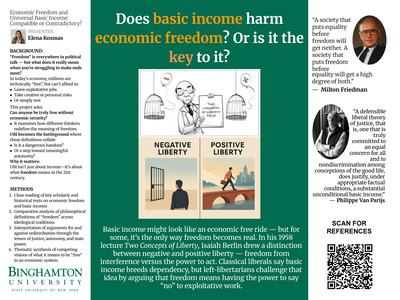
From Stagflation to Compensation: Did Economic Crisis Make a Case for Basic Income?
Ty Riccobene
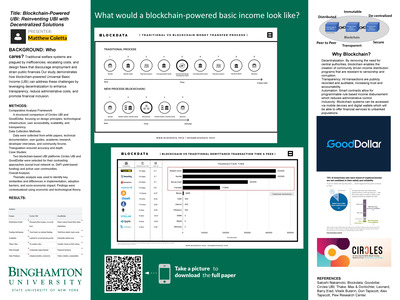
Researchers believe that economic booms and recessions appear to influence perceptions of guaranteed income. However, it is difficult to explain why any particular crisis leads to a fall or rise in public support for basic income. This paper explores various qualitative and quantitative sources before and after the stagflationary period of the 1970s and ’80s to investigate how economic circumstances affected public views on guaranteed income. This research examines demographic data on basic income support over several periods, firsthand accounts from special interest groups affected by these downturns, and political commentary on politicians proposing various forms of basic income like George McGovern and Richard Nixon. By incorporating this data, along with scholarly analyses and statistical evidence, this project aims to determine whether this period of a negative supply shock in the United States led the public to view basic income more favorably and what that can tell us about modern basic income implementations.
-

The Epistemic Responsibility of 1930s Eugenicists: What the Trial of Ann Cooper Hewitt Shows about Modern Disinformation Discourse
Lia Richter
In this research, the author analyzes the 1936 eugenic sterilization trial surrounding Ann Cooper Hewitt, looking at the epistemic harms and wrong associated with the results and how those connect to modern day discourses of disinformation. It centers on the actions of two eugenicists involved, Ezra S. Gosney and Paul Popenoe. Richter argues that issues of epistemic responsibility in this eugenics case study reveal the ways in which this epistemic concept ties to disinformation and can further develop understandings of this emerging field.
-

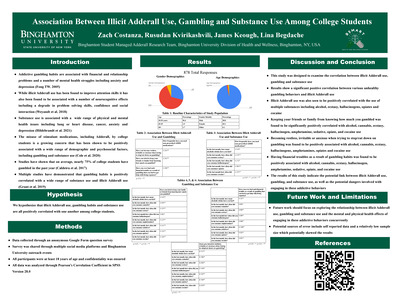
The Relationship Between Social Media, Nutrition, and Coping Mechanisms in College Students
Vivian Rodriguez, Emma Hobel, Antonietta Raymond, Julia Lin, and Lina Begdache
Social media influences the health of young adults in various ways, including its effects on nutritional choices and coping mechanisms during stressful situations. This study aimed to explore the relationship between social media use and negative eating behaviors, including disordered eating and unhealthy food consumption. Using an anonymous survey distributed throughout the Binghamton University campus, 805 total responses were gathered from participants aged 18 years or older. The survey included basic demographic questions and questions on social media use and nutrition. The Pearson Correlation Coefficient was used to analyze data in SPSS version 28.0. The results show a positive statistical correlation between disordered eating and consumption of unhealthy sugary and fast foods. There was also a positive correlation between disordered eating behaviors, and fear of weight gain were positively correlated with being uninterested in hobbies or other activities due to social media usage. This research highlights how social media directly influences disordered eating and coping mechanisms, ultimately impacting nutritional habits.
-

Freedom of Speech Denied within Reproductive Rights: How Syrian and Palestinian Women Peacebuilders Face Silencing in Exile
Taylor Rogers
Syrian and Palestinian women peacebuilders have been at the forefront of human rights development and conflict resolution. These women's rights have been suppressed and their freedom of expression, as guaranteed by the Universal Declaration of Human Rights, has been restricted. This research examines these women in exile and how they are silenced when they speak out against infringements on reproductive rights. Through qualitative analysis of individual stories, this study manually codes their testimonies into themes such as peacebuilding efforts, activism, specifically articulated needs and recommendations, and the challenges they face. The findings aim to reveal patterns of censorship against women and highlight the intimidation tactics employed by their governments, which exclude women's right to freedom of speech regarding reproductive rights. By amplifying their voices, this study explores suppressed speech and advocates for stronger protections of freedom of expression, particularly concerning reproductive rights for Syrian and Palestinian women peacebuilders.
-
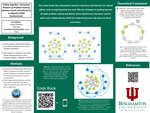
Failing Together: Interactive Patterns of Problem-Solving between Youth and Educators in Informal STEM Environments
Jacey Ruisi, Kelli Paul, and Amber Simpson
Integrating failure as a learning tool can help boost students' creativity and problem-solving skills, though more research is needed to understand how to effectively apply this approach. This study analyzed failure-based problem-solving interactions between educators and learners during informal STEM activities in museum settings, focusing on how the educator’s experience influenced these exchanges. A total of 38 self-recorded videos of museum educators working with learners in various environments, including camps, drop-in exhibits, and classrooms was examined. The findings reveal that educators play a crucial role in guiding problem-solving through supportive methods like prompting, with more experienced educators fostering a more collaborative dynamic, while those with less experience tend to use more direct instruction. This study underscores the value of a collaborative approach, where educators act as expert guides, in supporting students' creativity and problem-solving development through learning from failure.
-

Food Councils and Federal Committees: Community Responses to Inaction on Food Insecurity by Government
Liam Rupprecht and Kevin O'Connell
The issue of food insecurity in the United States is often overlooked, despite its destructive impact on vulnerable groups like children, racial minorities, and those in poverty. Non-white urban communities of color especially have significantly higher rates of household food insecurity due to systemic racism in food systems. Federal efforts have failed to resolve the issue, leaving it to local “food council” organizations that attempt to help through advocacy and charity. These groups face a difficult task: how can they work to mitigate food insecurity with limited community or charity resources, especially in underprivileged areas? This research compiles contemporary scholarly analysis of food insecurity across United States communities, collecting data from food councils across New York State to understand the causes and unique solutions each food council employs in their counties. This project aims to shape the discourse around and implementation of future policy.
-

Using Exploratory and Confirmatory Factor Analytic Approaches to Examine Commonly Used Religious and Spiritual Measures
Joelle Sacks, Monica Ramirez-Molina, Roshan Patel, and Alyssa Miville
Religion and spirituality are important to many individuals, though the lack of agreement across definitions and measures make them somewhat complicated constructs to examine. This study analyzes several existing faith-based inventories. Exploratory and confirmatory factor analyses revealed four major factors. Ultimately, our results suggest that there is a need for additional validation work on measures in this field to ensure more accurate measurement and to allow for better comparison of findings across studies.
-

Qualitative Analysis of Instagram Engagement
Kenneth Saito
The Binghamton University Libraries utilizes its Instagram platform to engage its audience and to share information regarding its resources and services. Current research suggests elements such as color grading, scenic backgrounds, and maintaining a proper online social media presence affect how Instagram users engage with content. However, additional elements such as audience type and how they engage with content may factor into the Libraries’ reach on their platform. This project seeks to identify how the Libraries Instagram platform can maximize engagement based on their audience needs and identified interaction behavior. A literature review determined that a qualitative survey is the best method for this project due to its practicality, quality of responses, and the greatest possibility of reach. Results of the data collected, correlations of the data set, and recommendations based on the findings will be presented via a poster presentation to be used by the Libraries Administration for future implementation.
-

Looking Beyond the Borders: Portrayals of Borderline Personality Disorder in Memoirs and Film
Ashley Sanchez-Frias
Borderline Personality Disorder (BPD) is a mental illness that is often demonized or misrepresented in the books and films that portray it. By contrast, self-representations of BPD, such as memoirs, offer a more holistic depiction that can provide greater information and opportunities for empathetic response. This research explores key differences between self-representations of BPD and portrayals by those without the diagnosis, and asks why harmful stereotypes persist despite critiques from mental health advocates. The project takes as its central case study the memoir "Girl, Interrupted" and compares it with its 1999 film adaptation, arguing that the film inaccurately portrays symptoms and the process of treatment. It also analyzes other works, such as "The Buddha and the Borderline", to discuss the stigmatization and focus on negative factors in portrayals. Finally, it explores the effects of shifting these representations, including increasing awareness and the probability that individuals with BPD seek treatment.
-

Alcohol, Diet, Mental Distress, and Resilience
Isabella Schneider, Alyssa Pierro, Chloe Martinetti, Hailey Roberts, and Zachary Inman
The purpose of the study was to determine the relationship between habits surrounding alcohol use, diet quality, mental distress and resilience. An anonymous online survey was administered through Google Forms and was disseminated through text messages and social media. The survey was conducted on primarily young adults and other adults in the New York area, and data was analyzed using Pearson’s Correlation Analysis in SPSS version 28.0. Our research found a strong positive correlation between high alcohol consumption and feelings of hopelessness (p < 0.01), as well as a positive correlation between a healthy diet and mental resilience (eg: fruit consumption [p < 0.05], beans [p < 0.05], and fish [p < 0.01]). Through this study, the hope is to identify connections between dietary practices and mental health, ultimately giving people the tools they need to promote an overall positive mental state.
-

Weaponization of Words: A Rhetorical Analysis of Donald Trump
Jadyn Schoenberg
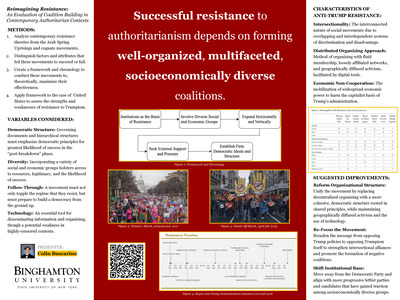
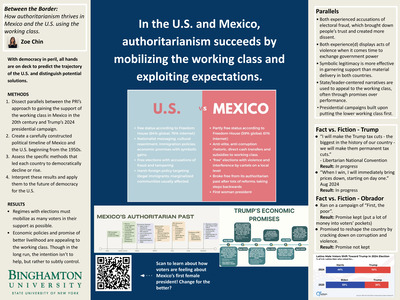
Historically, totalitarian regimes have derived control from violence, but today’s authoritarians utilize the weaponization of rhetoric. The new era of authoritarianism demonstrates that an aspiring authoritarian can verbally manufacture polarization, and create the crisis necessary for their ascendancy. This research focuses on U.S. President Donald Trump’s rhetoric, specifically how his language has furthered American political polarization, allowing him to unite his supporter base, while alienating the political left. The research is centered around analyzing Trump’s 2024 speeches, and existing literature on his rhetorical strategies in 2016. In these sources, Trump is widely defined as a populist demagogue due to his ability to capitalize on his supporters’ distrust in government and inherent hatred towards certain groups. Many Americans denounce the argument that Trump can erode America’s democratic institutions due to his political inexperience, but his strategic rhetoric proves that he is aware of the exploitable weaknesses of American democracy.
-

Investigating the Correlation Between Diet Quality and Psychological Resilience
Bo Schooley, Sean Morrissey, Jasmina Abdurasulova, Margaret Giordano, and Morgan Andersen
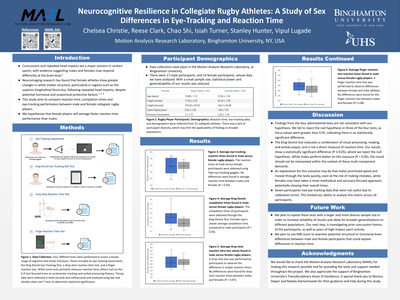
Psychological resilience is associated with numerous positive mental health outcomes. This study examines the correlation between diet quality and psychological resilience. An anonymous survey was administered digitally and was shared by group members through social media platforms and flyers posted throughout the Binghamton University campus. The survey included questions regarding demographic and lifestyle information, nutrition habits, psychological resilience and flexibility, and recent experiences with emotions. A healthy balance of whole grains (p<0.01), vegetables (p<0.05), meat (p<0.05), and carbohydrates (p<0.05) is associated with increased psychological resilience. Comparatively, legumes (p<0.05) and caffeine (p<0.05) consumption are associated with lower reported psychological resilience. These findings emphasize the importance of improving diet quality for the overall psychological health of people as a simple and non-pharmaceutical way for all people to improve their psychological health, making it an accessible route for multiple populations.
-
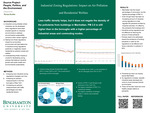
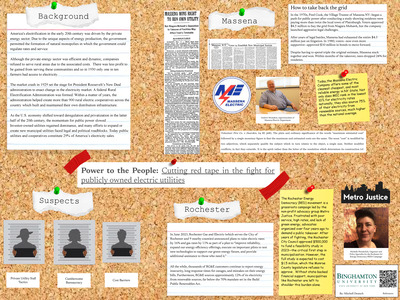
Industrial Zoning Regulations: Impact on Air Pollution and Residential Welfare
Teresa Scotto
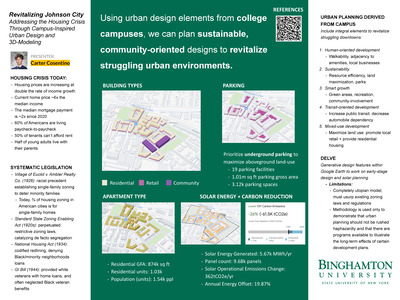
Industrial zoning plays an important role in shaping cities and towns — it's the blueprint that dictates where industries can be developed, ensuring its impact on the environment and communities is carefully managed. This study examines the impact of industrial zoning regulations on air pollution levels and residential welfare in urban areas. The methods of research include analyzing air quality measurements before and after zoning changes in several urban areas, alongside residential factors such as traffic congestion. Traffic volume, vehicle emissions, and pollution concentrations (NOx and particulate matter) are compared to determine how shifts in industrial zoning affect environmental outcomes. Addressing these questions will help determine if industrial zoning regulations positively or negatively impact residential air pollution levels and welfare. Understanding these impacts is crucial for developing zoning policies that balance industrial growth with public health and environmental sustainability.
-

Hospitalization Disparities Among Children with Sickle Cell Disease: The Significance of Race, Age, and Health Status
Justin Shade, Cordelia Martin-Ikpe PhD, Titilayo Okoror PhD, and Molly Moran
Sickle cell disease (SCD) is a hereditary disorder where red blood cells (RBCs) become rigid and sickle-shaped, causing vaso-occlusive crises and severe pain. SCD affects 100,000 Americans, with about 1 in 13 Black babies born with sickle cell trait (SCT). Using data from the National Health Interview Survey (NHIS) via IPUMS, this study analyzed SCD patients aged 0-19. Cross tabulations, ANOVA, and General Linear Model (GLM) analyses assessed hospitalization rates by race, age, and health status. Black/African American children had significantly higher hospitalization rates. Infants (0-2 years) had the highest hospitalization rate (mean = 1.37), while early childhood (3-6 years) had the lowest (mean = 1.10), with significant differences (p < 0.001). Poor health status was strongly associated with increased hospitalizations (p < 0.001). Black infants were found to be at the highest risk. Future studies should explore drug therapy efficacy across age groups to develop age-appropriate treatments and address hospitalization disparities.
-

Analysis of Shared Experiences of Asian Female Leaders in Non-Profit Corporate Structure
Abby Shapiro, Mina Lee PhD, and Daniel Lin
Diversity in executive leadership provides many strengths to organizations such as fostering inclusive work environments and strengthening organizations’ ability to serve diverse populations. Still, there is a lack of understanding about the experience of female CEOs in the nonprofit sector and their pathways to executive leadership, particularly those of Asian descent. In order to understand the representation of female CEOs of Asian descent, this study analyzed the United Business Master File (UBMF) compiled by the National Center for Charitable Statistics. Based on the name of the CEO, the gender and race/ethnicity was assigned by using the machine learning algorithm. While women account for 75% of the workforce of the non-profit sector, Asian American women hold only 2% of executive roles, while their white counterparts hold 42%. This shows underrepresentation of women in general as well as those of Asian descent and implies that leadership development is crucial among these populations.
-

Evaluating Waste Management Reform in the Municipality of Binghamton
Shreyash Shrestha
This paper aims to investigate the potential for a three-stream waste management system mandate to be introduced in the city of Binghamton. The area currently utilizes the Blue Bag Policy which, after three decades in effect, faces an uncertain future due to a rise in residential complaints regarding the unreliable and inefficient nature of the program. In light of such issues, this paper conducts a comparative analysis between municipalities with a mandated three-stream waste management system and Binghamton’s current approach to assess operational differences and performance outcomes, and ultimately realize Binghamton’s need to update their waste management system. To incentivize such a shift, the paper conducts a cost-benefit analysis showcasing the potential for a reduction in landfill tipping fees after a three-stream system is instituted. Additionally, the paper utilizes the Institutional Analysis and Development (IAD) framework and interviews with relevant officials to ensure well-founded conclusions.
Printing is not supported at the primary Gallery Thumbnail page. Please first navigate to a specific Image before printing.